

PVC Adhesive Tapes
What is Adhesive Tapes
Adhesive tapes is a combination of a material and an adhesive film and used to bond or join objects together instead of using fasteners, screws, or welding. Applying adhesive tapes in lieu of mechanical fasteners enables you to use lower temperature applications, which can simplify the manufacturing processes. Additionally, adhesive tapes can protect your surface area since there is no need to damage the surface by using fasteners or screws.
Advantages of Adhesive Tapes
Versatility
Adhesive tapes come in various types, each designed to serve specific purposes. Whether you need a tape for bonding, sealing, packaging, or insulation, there is a tape available to meet your requirements. From general-purpose tapes to specialized variants like double-sided tapes, masking tapes, duct tapes, and electrical tapes, the versatility of adhesive tapes makes them suitable for a wide range of applications.
Ease of Use
One of the primary advantages of adhesive tapes is their simplicity and ease of use. Unlike traditional methods such as gluing or welding, tapes can be applied quickly and effortlessly. With no need for additional tools or equipment, anyone can use adhesive tapes to complete tasks efficiently. The user-friendly nature of tapes makes them accessible to both professionals and DIY enthusiasts.
Bonding Strength
Adhesive tapes provide excellent bonding strength, enabling them to hold materials together securely. Depending on the type of tape and its intended purpose, adhesive tapes can offer varying levels of adhesion. Some tapes are designed for permanent bonding, ensuring a long-lasting hold, while others allow for easy removal and repositioning. With the right adhesive tape, you can achieve strong and reliable bonds, eliminating the need for additional fasteners or adhesives.
Surface Compatibility
Another advantage of adhesive tapes is their ability to adhere to various surfaces. Whether you are working with paper, plastic, metal, glass, fabric, or even uneven surfaces, there is an adhesive tape suitable for the task. Tapes are engineered to provide optimal adhesion on different materials, making them a versatile choice for numerous applications.
Residue-free Removal
Certain adhesive tapes, such as masking tapes and painter's tapes, offer residue-free removal. This means that even after extended periods of use, the tapes can be peeled off easily without leaving behind any sticky residue or damaging the surface. This feature is particularly valuable when working on delicate or finished surfaces, as it eliminates the need for time-consuming clean-up processes.
-
![PVC Electrical Insulation Tape]() PVC Electrical Insulation TapeOne of the primary advantages of PVC insulating tape is its ability to provide electrical insulation.read more
PVC Electrical Insulation TapeOne of the primary advantages of PVC insulating tape is its ability to provide electrical insulation.read more
It can be used to wrap and insulate electrical wires and cables, preventing electrical... -
![Automotive Wiring Harnesses PVC Tape]() Automotive Wiring Harnesses PVC TapeComposed of pvc film and rubber adhesive, which is specialized in insulating wrapping automotive wiring harness for its good insulation, fire resistance, cold resistance, cold resistance, voltage...read more
Automotive Wiring Harnesses PVC TapeComposed of pvc film and rubber adhesive, which is specialized in insulating wrapping automotive wiring harness for its good insulation, fire resistance, cold resistance, cold resistance, voltage...read more -
![Auto Wiring Harness Tape]() Auto Wiring Harness TapeProduct Name: Auto Wiring Harness Tape / PVC Automotive Wiring Harness Taperead more
Auto Wiring Harness TapeProduct Name: Auto Wiring Harness Tape / PVC Automotive Wiring Harness Taperead more
Material: PVC backing + pressure-sensitive adhesive
Standard Widths: 9mm / 15mm / 19mm / 25mm
Length:... -
![Car Cable Binding Tape]() Car Cable Binding TapeCar Cable Binding Tape is a reliable automotive wire harness tape designed for cable fixing, protection, and insulation with strong adhesion and high temperature resistance.read more
Car Cable Binding TapeCar Cable Binding Tape is a reliable automotive wire harness tape designed for cable fixing, protection, and insulation with strong adhesion and high temperature resistance.read more -
![Specialized Electrical Construction Tape]() Specialized Electrical Construction Tapestrong viscosityread more
Specialized Electrical Construction Tapestrong viscosityread more
Good insulation
Good flame retardancy
Withstand voltage
Good ductility
Operating temperature: -10°C to 80°C -
![Wrap Electrical Wires With PVC Tape]() Wrap Electrical Wires With PVC TapePVC electrical tape specifically designed for wire bundling. Provides reliable insulation, excellent grip, and easy wrapping. Ideal for home, construction sites, and industrial settings. Securely...read more
Wrap Electrical Wires With PVC TapePVC electrical tape specifically designed for wire bundling. Provides reliable insulation, excellent grip, and easy wrapping. Ideal for home, construction sites, and industrial settings. Securely...read more -
![Waterproof PVC Electrical Tape]() Waterproof PVC Electrical TapeWaterproof PVC Electrical Tape, moisture-proof and water-resistant, aging-resistant, with stable adhesion. Suitable for electrical insulation, outdoor joint protection, pipe repair, and labeling.read more
Waterproof PVC Electrical TapeWaterproof PVC Electrical Tape, moisture-proof and water-resistant, aging-resistant, with stable adhesion. Suitable for electrical insulation, outdoor joint protection, pipe repair, and labeling.read more -
![Cold Resistant PVC Electrical Tape]() Cold Resistant PVC Electrical TapeBase Material: Flexible PVC Filmread more
Cold Resistant PVC Electrical TapeBase Material: Flexible PVC Filmread more
Thickness: 0.12 mm – 0.25 mm (Customizable)
Low Temperature Resistance: -20°C to +85°C (Adjustable by formulation)
Colors: Black, White, Yellow,... -
![PVC Waterproof Industrial Tape]() PVC Waterproof Industrial TapeWidth options: 19mm, 25mm, 50mm (customizable)read more
PVC Waterproof Industrial TapeWidth options: 19mm, 25mm, 50mm (customizable)read more
Thickness: 0.13mm - 0.20mm
Length: 10m, 20m, 50m (customizable)
Colors: Black, white, blue, etc. (customizable upon request) -
![Vinyl Insulating Tape]() Vinyl Insulating TapeVinyl Insulating Tape utilizes premium PVC film as its base material, combined with a rubber-based adhesive, delivering both excellent insulation properties and stable adhesion. It is suitable for...read more
Vinyl Insulating TapeVinyl Insulating Tape utilizes premium PVC film as its base material, combined with a rubber-based adhesive, delivering both excellent insulation properties and stable adhesion. It is suitable for...read more -
![Utility PVC Electrical Insulation Tape]() Utility PVC Electrical Insulation TapeA practical PVC electrical insulation tape featuring stable adhesion and excellent stretchability. Available in a full range of specifications, it is suitable for daily electrical maintenance and...read more
Utility PVC Electrical Insulation TapeA practical PVC electrical insulation tape featuring stable adhesion and excellent stretchability. Available in a full range of specifications, it is suitable for daily electrical maintenance and...read more -
![Electrical Insulating Tape]() Electrical Insulating TapeElectrical Insulating Tape has a uniform structure and good flexibility, which can closely adhere to the surface of complex cables. It maintains a firm adhesion effect even in bending, stretching...read more
Electrical Insulating TapeElectrical Insulating Tape has a uniform structure and good flexibility, which can closely adhere to the surface of complex cables. It maintains a firm adhesion effect even in bending, stretching...read more


Why Choose US
Our Factory
Henan Derun New Material Technology Co., Ltd. focuses on the R&D and production of high-tech materials. We occupy 40,000 square meters of land, have 45 staff members, and a production capacity of 5,000 m³ per month.
Certificates
Our products are certified by ISO 9001, ISO 14001, OHSAS 18001, BSCI audits, and others.
Sales Market
We export to various countries and regions, including the United States, Europe, Australia, Asia, South America, Africa, and the Middle East.
Product Application
Our products are widely used in households, kitchens, bathrooms, offices, car cleaning, and industrial cleaning.
Types of Adhesive Tapes

Security Tape
Security tapes are one of the primary essentials every security industry should possess in adequate numbers. They are beneficial for packaging and shipping over long distances and even overseas. Security tape is a security label that protects the objects stored inside. They are handy for the storage of sensitive and fragile things. As their primary purpose is to secure contents, they are naturally strong and versatile, so much so that sometimes shippers use them on the whole box for good measure. They have a similar appearance and function to packing tape, but security labels are often on the cheaper side of the spectrum.

Electrical Tape
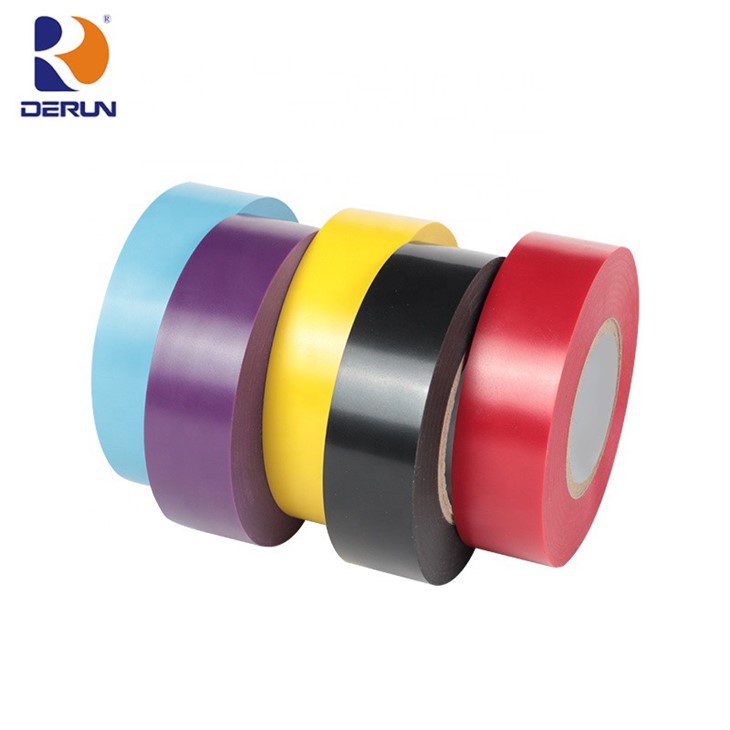
Commonly known as insulation tape, they are a domestic necessity for houses having electricity issues. They can pretty much be used for anything that conducts electricity. It is made from several plastics but is mainly available in vinyl. This is because of its long life span, with added stretchability and insulation properties. Electrical tapes come in a wide range of varieties and colors, facilitating labeling and grouping functions. They are normally used in industries to indicate different voltages and degrees of security.

Gummed paper tape
Made from kraft paper, gummed paper tape is 100% biodegradable and requires water to activate the adhesive upon application. This creates a complete bond with the carton as the water-activated adhesives penetrate the liner of the carton. On top of the high sealing capabilities, gummed paper tape creates a tamper-evident solution for your package. This is often utilised by the automotive and electronics industry due to the nature of the high value products.
As noted earlier, a broad spectrum of sticky tape types can be categorized depending on their use and application on materials. While some can be activated through pressure, others have complex designs that can only work in certain conditional mediums. Tapes are made of carrier material and the respective adhesive. That said, not all adhesives can be used for taping purposes.
Acrylic: Provides strong and intense resistance from environmental conditions; minimal setting time in comparison to other kinds of adhesives
Epoxies: Also known as resins, gum material that does not shrink with curing and is self-protective of environmental and chemical changes
Rubber: Based on solid compounds such as butadiene-styrene, polyisobutylene, butyl, and nitrile; extraordinarily flexible and adjustable sealants
Silicone: Highly flexible and temperature resistant
Other: Isocyanate sealants and polyurethane-based adhesives form a combination of all the above characteristics; They exhibit strength, utility, long lifespan, and adjustability.

Which Materials Are Used for the Backing
Tapes have two essential components- the adhesive and the carrying material. Although understanding the adhesive can prove crucial for its usage, the backing material is equally important because it must go along with being used. Adhesive films can be made from various materials depending on the purpose. The most common ones are listed below:
Paper: Also referred to as flat-back tape
Cloth: Uses a fabric or a piece of the woven layer
Felt: Non-woven materials that provide scratch resistance and protection
Foam: Usually combined with a cover liner; its primary purpose is for mounting and sealing.
Metal Foil: Aluminum and tin metals are often used as backing materials. Lead foils are also widely used due to their heat-resistance properties. They are excellent backing materials for holding objects exposed to high moisture and humidity. While metallic tape designs typically cater to sealing and seaming, aluminum-based ones are pre-laminated on plastic or paper bases to exhibit strong properties. Copper carriers are widely used in manufacturing PCBs.
Plastic Film or Polymers: They are generally categorized as thermoplastics and thermosets based on the number of plastic layers it incorporates. They are widely used for designing due to their layering abilities and because they can come in any style- clear, organized, or mono-colored.
Mylar: Mylar is also known as polyester or polyester-based products
Filament bundles (or strap tape) consist of millions of fiberglass filaments converted into a thread-like structure. It is more versatile than other backing materials and can stick differently shaped objects. They are commonly used for storage and shipping.
Double-sided tapes must have a covering liner or release liner on at least one surface. These liners are preferably made from solid and smooth materials like silicone or paper.
How to Choose Adhesive Tapes Through Testing Methods


Resin Rubber: Being the older kind of adhesive, it combines rubber and sap. It is affordable and solid in comparison to other types of adhesive tapes. It holds together materials, even if they are hard to stick. Thanks to their strong bonds, they can resist higher temperatures to some extent. However, they oxidize quickly in the presence of air and UV rays.
Synthetic Rubber: They are manufactured rubber materials that are super adhesive instead of natural rubber. It is widely used for shipping and security purposes due to its sheer strength.
Acrylics: They form the weakest of adhesives. They resist environmental factors such as temperature, UV ray exposure, and oxidation. As a limitation, they seem to be out of budget for commercial usage. They also require lag time to activate their stickiness.
Silicone adhesives: These adhesives are long-lasting. They are incredibly durable and skin-friendly. Due to this property, they are used in bandaids in the medicine industry. Thanks to excellent heat resistance, they are widely used in the electrical and temperature-based industries. Unfortunately, they are on the expensive side of the budget spectrum, even more so than acrylics.
That said, there are some testing variables to understand the various properties of the tape. They are as follows:
Peel adhesion: The force required to break a bond between the PSA and the surface material. This testing method tests the adhesion strength by peeling the tape at a uniform pressure and speed at a certain angle. It calculated the extent of bond breakage. It is represented by oz/in.
Tack: It is the adhesive property of the tape. To put it more elaborately, the tape can wet the adhesive on the surface upon contact. This measures bond formation, as opposed to peel adhesion. This is used in most tamper evident tapes.
Shear: It is essentially the speed of movement of an adhesive tape. It measures the sticking power and can be calculated statically or dynamically. When a static load is applied on a vertically-pulled tape, the shear is referred to as static shear. Similarly, dynamic shear measures the horizontal stress of the tape.
Tensile Strength and Elongation: Lastly, this factor measures the strength of the tape concerning its construction. Conversely, elongation is calculated as the percentage change in the tape’s length when pulled from both sides with a special force.
Adhesive Coating Types
|
Acrylic |
Acrylic adhesives provide excellent environmental resistance and faster setting times than other resin systems. |
|
Epoxy |
Epoxy resins are adhesives that exhibit high strength and low shrinkage during curing. Epoxies are known for their toughness and resistance to chemical and environmental damage. |
|
Hot Melt/Heat Activated |
Heat activated, thermally activating or heat bond adhesives become tacky or sticky when heat is applied. The adhesive may soften but not necessarily melt. Hot melt adhesives can be repeatedly softened and melted by heat and hardened or set by cooling. Cooling allows the removal or repositioning of parts during assembly. |
|
None/Non-adhesive |
Non-adhesive tapes, films or laminates do not have an applied adhesive but may be self-adhering. PTFE thread-sealing tape is a type of non-adhesive tape. |
|
Pressure Sensitive (PSA) |
Pressure sensitive adhesives (PSAs) or contact adhesives are aggressively and permanently tacky at room temperature in dry (solvent free) form. They adhere firmly to a variety of dissimilar surfaces upon contact, requiring only the application of finger or hand pressure. PSAs do not require water, solvent or heat activation in order to exert a strong adhesive force on materials such as paper, plastic, glass, wood, cement and metal. PSAs have a sufficiently cohesive holding and elastic nature so that despite their aggressive tackiness, they can be manipulated by hand and removed from smooth surfaces without leaving a residue. In terms of general trade usage, leading tape manufacturers do not sanction the extension of the term "pressure sensitive" to include tapes and adhesives just because they are sticky (e.g. fly paper), or just because they adhere or cohere. |
|
Rubber |
Rubber-based adhesives provide highly flexible bonds and are usually based on butadiene-styrene, butyl, polyisobutylene or nitrile compounds. |
|
Silicone |
Silicone adhesives and sealants have a high degree of flexibility and very high temperature resistance. |
Construction Industry
Adhesive tape plays a vital role in the construction industry, from masking off areas during painting and decorating to holding pipes and cables in place. In addition, adhesive tapes seal joints and seams and protect surfaces from moisture and dirt.
Adhesive tapes are a critical component during building, bonding, and designing. For example, adhesive tapes attach metal panels and other materials without welding or riveting. As a result, it creates a stronger, more durable bond.
Packaging Industry
The packaging industry uses adhesive tape for various applications, from sealing boxes and packages to labeling products. Adhesive tapes also secure straps and handles and provide reinforcement.
Adhesive film tape plays a crucial role in the packaging industry by providing a physical barrier between the contents of a package and the environment. As a result, they protect products from damage during transit.
Automotive Sector
Adhesive tape is handy in the automotive sector, from holding parts together during assembly to protecting surfaces during painting and coating. In addition, adhesive tapes come in handy during hole drilling, grasping screws, and other small parts.
Adhesive tapes also help during the painting and coating processes by providing a physical barrier between the substrate and the environment. As a result, it prevents contamination and ensures a consistent finish.
Electronics Industry
Adhesive tape is necessary in various electronics industry applications, from holding parts together during assembly to protecting surfaces from moisture and dirt. In addition, adhesive tapes protect surfaces from contamination.
Adhesive tapes play a crucial role in the electronics industry by providing a physical barrier between electronic components and the environment. As a result, they prevent damage and ensure a consistent finish.
Household Appliances
The home goods industry relies heavily on adhesive tape to hold parts together during assembly. For example, traditional adhesive tapes help integrate the inner tub with the adhesive in washing machines. This step ensures a watertight seal and prevents leaks.
Waterproof adhesive tape is excellent for manufacturing other household appliances such as dishwashers, dryers, and refrigerators. Adhesive tapes have an acrylic adhesive density that helps hold parts together during assembly and prevent leaks.
How to Store Adhesive Tapes
Temperature: Heat is crucial for adhesive retention. And this includes the adhesive, the carrier, and the surface to which it is applied. Make sure that these materials are at least 65 degrees Fahrenheit.
Surface: Many complaints about the adhesive tape are actually the problem of the surface. Vestiges of dirt or moisture can destroy the tape’s properties and create a barrier. To avoid this, give it a quick wash of rubbing alcohol with a dry clean cloth. Another factor to consider is the uniformity (regularity) of the surface too. Irregular surfaces can slightly damage the thin, smooth surface.
Chemistry: The composition of the surface also plays a massive role. The adhesive tape can be secured differently based on whether it is made of plastic, covered with paint coating, has a release liner, etc. Keep in mind that if the surface is waxed, there is a need to buy tackier tape. This applies to the adhesive, backing material, release liner, etc.
Humidity: Moisture can wear out the stickiness if the adhesive happens to be a weak one.
Shelf life: The security tape manufacturers best determine the usable period. This must be the first factor when looking for adhesive tape. It would be shown in the datasheet or behind the package under normal circumstances. Pay attention to their recommendations as well.
Other: The type of adhesive, carrier, covering liner, application method, adhesive tape manufacturer, and storage conditions can also determine the strength and usable period of using the tape effectively and efficiently.
FAQ
We're well-known as one of the leading adhesive tapes manufacturers and suppliers in China. Please feel free to wholesale customized adhesive tapes at competitive price from our factory. For free sample, contact us now.
Sustainable Cleaning Cloth,